Bayfront vs Oceanfront In Newport Beach: How To Decide
March 12, 2026
March 12, 2026
Torn between the calm of the harbor and the energy of the open beach? In Newport Beach, both bayfront and oceanfront properties deliver world-class waterfront living, yet they feel very different day to day. You want a home that fits your lifestyle, holds long-term appeal, and comes with clear expectations on costs, logistics, and permits. This guide breaks down the trade-offs so you can choose with confidence. Let’s dive in.
Bayfront living centers on boating, calmer water, and the convenience of private docks in many neighborhoods. Oceanfront life is all about direct sand access, big-sky views, and walkable beach scenes. Both are scarce and command premium pricing, but they come with distinct maintenance needs and permit paths.
| Your Priority | Bayfront: Harbor Living | Oceanfront: Beach Life |
|---|---|---|
| Lifestyle fit | Daily or weekly boating, paddle, and marina access | Surf, sand, sunsets, and boardwalk energy |
| Privacy & quiet | Quieter evenings on many channels and islands | Higher public activity near beaches and piers |
| Maintenance & insurance | Dock and bulkhead upkeep, harbor permits | Coastal hazard exposure, erosion, and flood rules |
| Resale drivers | Private dock or slip rights can create premiums | Direct sand access and unobstructed ocean views drive value |
If you want to step onto the sand, watch waves from your terrace, and live near beachside cafes, oceanfront might be your match. Expect higher foot traffic and seasonal activity around the Balboa Peninsula and the piers. Properties here can sit in high-velocity wave zones that influence building rules and remodel paths. Get a sense of public beach dynamics and popular surf spots through the City’s beach information page: Newport Beach beach information.
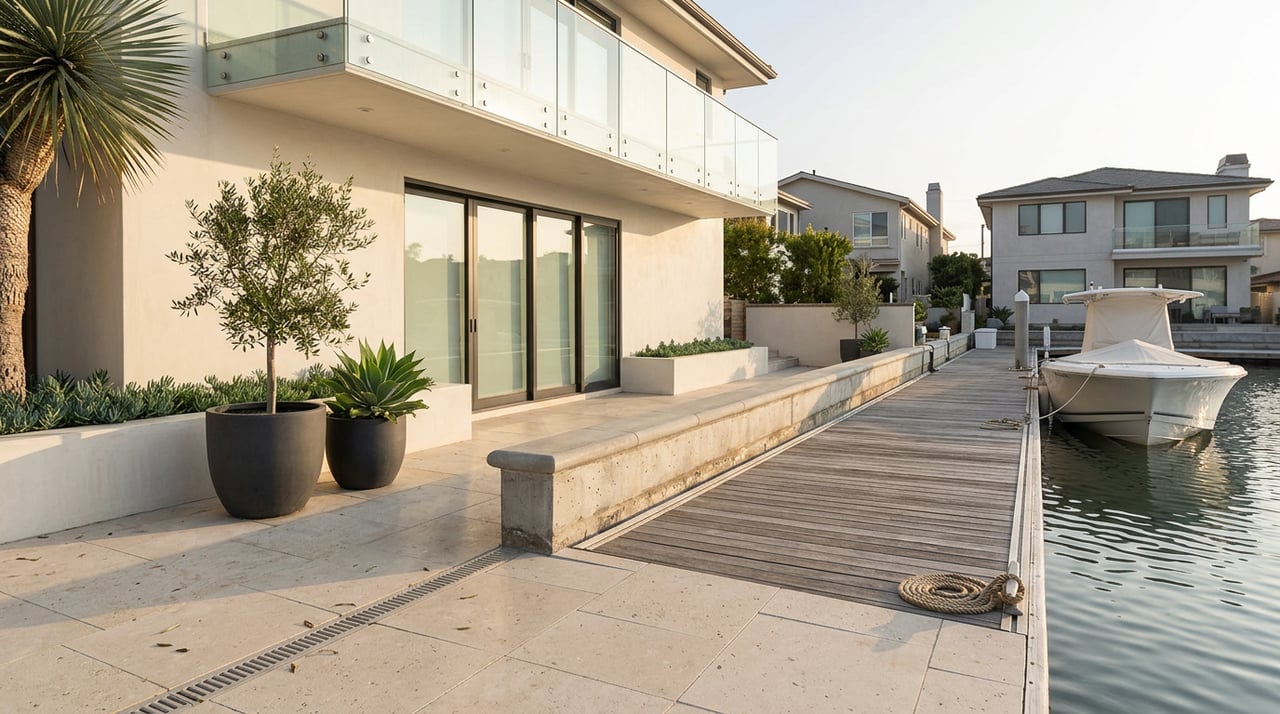
Prefer a sheltered setting with your boat just steps away? Bayfront neighborhoods like Lido Isle, Linda Isle, Balboa Island, and Dover Shores often offer private docks or nearby marina options. Water is calmer for small-craft use and social boating, with evenings that feel quieter than the oceanfront boardwalk. Harbor life is structured, so plan to verify dock permits, slip rights, and mooring details with the City’s Harbor Department: City of Newport Beach Harbor Department.
Private docks are far more common on inner-harbor parcels than on the open oceanfront. If boating is part of your daily or weekly routine, the ability to keep your vessel behind your home can be a major value driver. Always confirm that any dock is a permitted residential pier, including dimensions, vessel limits, and shared-use agreements.
Newport Harbor offers a mix of public guest slips, private marinas, and moorings, with availability that can vary by season. Factor slip or mooring fees and guest policies into your annual budget if you will not have a private dock at home. The Harbor Department manages guest slips and moorings and can help you understand options and requirements: Newport Beach Harbor overview.
Maintenance dredging is part of life in an active harbor. The Army Corps and the City operate under regional permits to maintain navigation depths, and timing can influence in-water work, dock use, and permit windows. Ask about recent dredging in your immediate channel and planned schedules. For context on the regional permitting framework, see the Army Corps’ regional dredging program notice: USACE regional permit notice.
Newport Beach is a high-value market, and both bayfront and oceanfront homes typically trade in the multi-million-dollar range. Micro-markets can shift quickly due to small sample sizes, property uniqueness, and seasonal inventory. In general, oceanfront properties capture premiums for unobstructed views and direct beach access, while bayfront estates with private, wide-water docks command top pricing among active boaters.
Buyers often weigh long-term coastal risk and maintenance in their valuation. Flood exposure, erosion, and the cost of shoreline or dock systems can affect demand. If you are comparing addresses across Balboa Peninsula, Peninsula Point, Corona del Mar bluffs, and the harbor islands, lean on fresh MLS data and a property-by-property review to understand how each parcel’s features price in today’s market.
Many waterfront properties are in FEMA Special Flood Hazard Areas. Pull the property’s FEMA Flood Insurance Rate Map panel and any Letters of Map Change, and if needed, order an Elevation Certificate. Start insurance quotes early so you understand the real premium impact before you write an offer. Use the City’s FEMA resource to locate mapping and guidance: Newport Beach FEMA flood maps.
Sea-level rise is part of long-range planning in coastal cities, including Newport Beach. State and federal tools visualize possible future inundation scenarios that can influence policy and project approvals. Explore the NOAA Sea Level Rise Viewer to understand general exposure patterns.
FEMA’s shift to parcel-specific pricing through Risk Rating 2.0 changed premiums for many coastal homes. Two similar-looking properties can have very different insurance costs based on elevation, distance to water, and rebuild values. Get quotes from NFIP and private carriers during due diligence, not after escrow opens. For background, review Congress’s summary of the new methodology: NFIP Risk Rating 2.0 overview.
Bulkheads, seawalls, and dock structures require upkeep in a saltwater environment. Expect higher baseline maintenance than inland properties due to corrosion, wood rot, and finish degradation. Materials selection and protective systems matter, and periodic inspections help you forecast capital costs. For a technical perspective on marine corrosion mechanisms and mitigation, see this peer-reviewed overview: Marine corrosion review.
If you are evaluating a bayfront property, ask for recent seawall or bulkhead inspection reports, any repair permits, and engineering estimates. The City regulates shoreline work, and timelines can vary. Recent staff actions illustrate how bulkhead and shoreline work is reviewed at the local level: City bulkhead and shoreline staff action example.
Newport Beach operates under a certified Local Coastal Program. Many oceanfront remodels, shoreline protection projects, and in-water activities require permits and, in some cases, may be appealable to the California Coastal Commission depending on jurisdiction. Before you plan a major renovation, confirm which agency has authority and what policies apply to revetments, seawalls, setbacks, and hazards. Start with the City’s Local Coastal Program FAQ: Newport Beach LCP FAQ.
Use these steps to match the property to your life and risk comfort.
Whether you are leaning toward harbor serenity or open-ocean drama, the right move is a property-specific plan: confirm permits, price long-term upkeep, and match the setting to your daily life. If you want a calm, concierge process and data to back your decision, connect with Kira Nimmer-Crabel to compare on-market bayfront and oceanfront options side by side.
Stay up to date on the latest real estate trends.





California Real estate specialist. With years of experience and a track record of success, we are here to exceed your expectations. Contact Kira today so she can guide you through the buying and selling process.
Get In Touch With Kira

341 Bayside Dr
Newport Beach, CA 92660