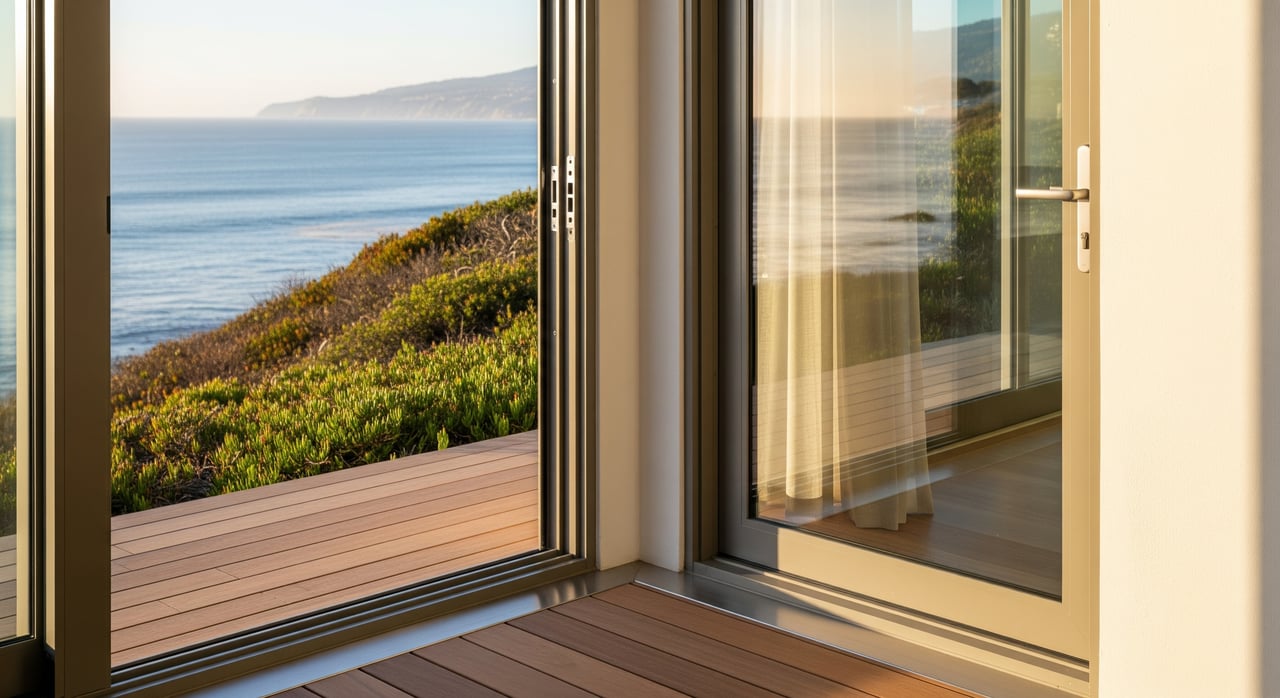
San Clemente Windows and Doors for Harsh Salt Air
October 23, 2025
October 23, 2025
Love the ocean breeze but not the rust it leaves behind? If you live or plan to buy in San Clemente, salt air can quietly shorten the life of windows and doors, and that affects comfort, upkeep and resale value. You want the views and the light without the headaches. In this guide, you’ll learn which materials stand up best, what performance ratings to ask for, the installation details that matter, and a simple checklist to use before you buy or sell. Let’s dive in.
Salt carried on coastal breezes accelerates corrosion on metals and can degrade finishes, seals and hardware. It is why exterior parts pit, stain and stick sooner near the surf. The closer you are to the water or an exposed bluff, the higher the load of airborne salts you should plan for. For background on how salt spray drives corrosion, see the overview of laboratory salt spray testing and its real-world implications in this summary of salt exposure.
San Clemente’s Mediterranean climate brings many sunny days, UV exposure and coastal humidity. Over time, that mix increases maintenance needs for oceanfront and bluff-top homes compared with inland areas. You can review local climate context in the San Clemente climate summary.
Choosing the right frame material is your first line of defense. Here is what performs well by the coast.
Fiberglass is highly resistant to salt corrosion and moisture. It stays stable in heat and sun, which supports long-term seals and energy performance. It is a strong pick for oceanfront and bluff-top sites where metal corrosion is a concern. Coastal building guides often rate fiberglass as a low-maintenance, high-durability option for windows and sliding doors.
Vinyl does not rust and holds up well in salt air. Choose products formulated for UV resistance so they do not become brittle over time. For many homes, vinyl provides a cost-effective coastal solution with solid performance. See a practical overview of coastal-friendly materials in this coastal window and door material guide.
Aluminum can work well at the coast when you specify the right finish and thermal break. Look for thermally broken frames with high-performance exterior finishes. Insist on an architectural-grade coating that meets AAMA 2605 or an equivalent fluoropolymer finish to handle salt and UV. You can learn what AAMA 2605 entails in this architectural coatings overview.
Aluminum-clad wood gives you a wood interior with a protected exterior. As with aluminum, the exterior should meet AAMA 2605-level finish quality, and the hardware must be marine-grade.
Hardware is often the first failure point in marine air. Prioritize these details:
Coastal homes often feature wide openings and large panels. Ask suppliers for tested performance, not just aesthetics.
Even the best products fail early if installed poorly. Focus on the basics:
Routine care preserves performance and warranties.
Use this quick list during showings, inspections or pre-list updates in San Clemente.
Parts of San Clemente fall under California’s coastal jurisdiction. Projects near the shore may require coastal review or a Coastal Development Permit, in addition to standard building permits. Jurisdiction can vary by parcel, so verify whether the City or the California Coastal Commission reviews your scope before you start. Early checks help you avoid delays and protect your timeline during a sale.
The right windows and doors keep your San Clemente home beautiful, comfortable and market-ready, even in salt air. If you are weighing an upgrade before listing or you want a second opinion on a home’s openings before you buy, let’s talk. You will get clear, data-informed guidance tailored to your property and goals. Connect with Kira Nimmer-Crabel for a thoughtful plan that supports long-term value.
Stay up to date on the latest real estate trends.
California Real estate specialist. With years of experience and a track record of success, we are here to exceed your expectations. Contact Kira today so she can guide you through the buying and selling process.
Get In Touch With Kira
341 Bayside Dr
Newport Beach, CA 92660