Sea Summit Mello-Roos in San Clemente: Understand Tax and HOA Costs
October 1, 2026
October 1, 2026
A resale buyer touring Sea Summit this fall pulls up the preliminary title report and finds a Community Facilities District special tax, separate from the base property tax, separate from the HOA statement. It reads like the scariest number on the page. It is, in fact, the one number in this transaction that has aged the best.
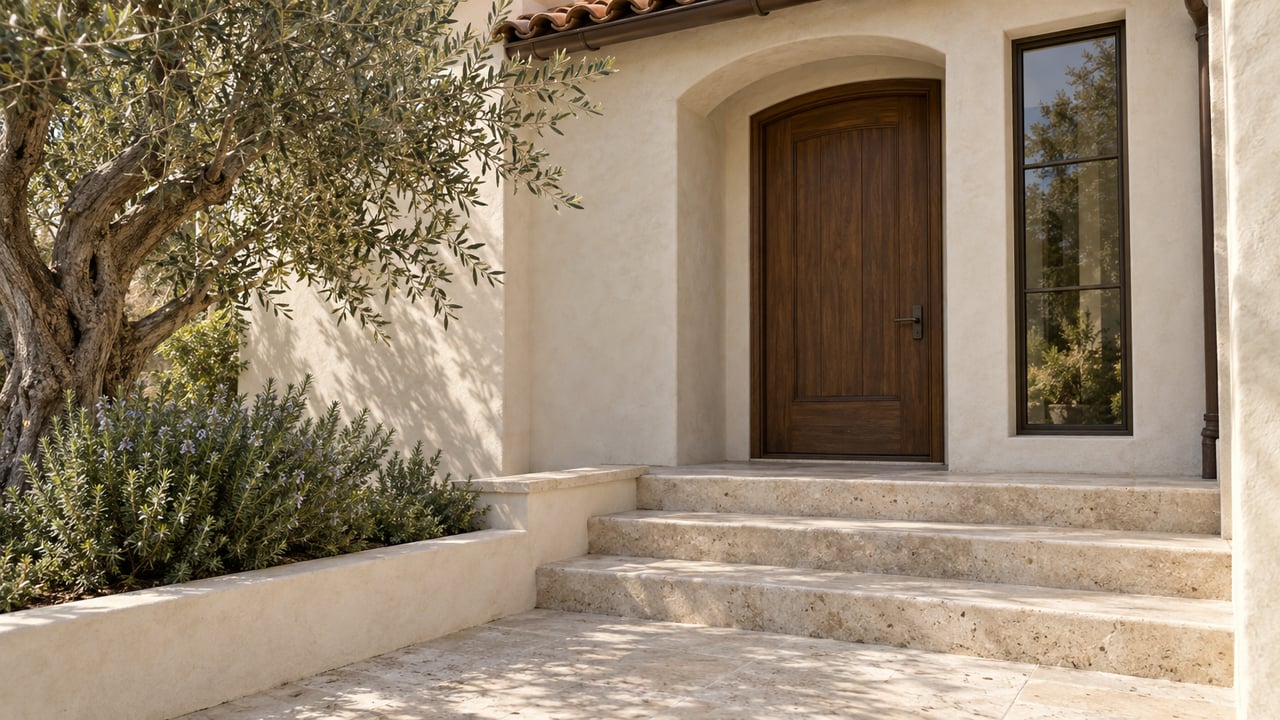
Sea Summit at Marblehead is the 309-home, Taylor Morrison-built community perched above the Pacific on the bluff west of Interstate 5, next to the Outlets at San Clemente. Taylor Morrison's own site now marks the Azure enclave sold out, and the other three neighborhoods are far enough along that most current activity in the community runs through resale listings rather than the builder's sales office. That shift changes what the Mello-Roos line item means for a buyer considering a resale.
San Clemente City Council approved the Sea Summit CFD to fund $58 million in infrastructure over a 30-year term, according to reporting in the San Clemente Times when the subdivision was nearing completion. The projected cost to homeowners at the time: roughly $8,000 to $11,000 a year, or about 1.1 percent of value annually, on top of the standard property tax bill. That figure was set against a specific starting point. Homes at Sea Summit opened in the higher $900,000s, with the most expensive expected to reach about $3 million, according to PR representative Jack Skelley, who was working with Taylor Morrison at the time.
The land itself has a longer history. Before Sea Summit broke ground, the same bluff was floated for more than 2,000 homes at one point, and, according to Skelley, for the Richard Nixon Presidential Library. Neither happened. What eventually rose across the 248-acre subdivision was Sea Summit's four neighborhoods: Aqua, with 127 homes from 2,214 to 2,649 square feet; Sapphire, 77 homes from 3,460 to 3,923 square feet; Azure, 81 homes from 3,775 to 4,686 square feet; and Indigo, the smallest and most expensive enclave, 24 homes ranging from 4,694 to 5,544 square feet. Because the parcels sit within 1,000 feet of the coastline, every phase required California Coastal Commission sign-off, including a final approval for the last 24 homes that Taylor Morrison's Southern California division president Phil Bodem described as clearing just months before construction wrapped.
A Mello-Roos special tax isn't calculated the way most people assume. It isn't a percentage of your purchase price, and it doesn't rise or fall with the market. It's a fixed dollar obligation set by the district's original rate and method of apportionment, typically tied to square footage or lot size, and it escalates on its own schedule, most commonly capped near 2 percent a year regardless of what's happening to home values around it, according to the California Debt Issuance Primer.
That's the opposite of how the base property tax behaves. Under Proposition 13, the roughly 1 percent base rate resets to the full purchase price every time a home changes hands, then grows at most 2 percent a year until the next sale. So an original Sea Summit buyer who closed in the community's early phase, at a price in the high $900,000s, was paying base tax on that high-$900,000s figure. A 2026 buyer paying San Clemente's current median, which sat at $1.8 million over the three months ending August 2026 according to public MLS-based reporting, up 6.6 percent from the same period a year earlier, resets their base tax to that new, higher number the moment escrow closes.
The CFD payment doesn't get that reset. It keeps climbing at its own slow, capped pace from whatever the original formula produced, on a home that may now be worth substantially more than it was in 2015. Run that forward across a decade of San Clemente appreciation and the CFD share of a resale buyer's total tax bill shrinks in relative terms even as the dollar figure ticks up slightly year over year. The tax that sounds like the scary number on the report is, mechanically, the one that's been losing ground to the market. The reset that actually grows with every sale is the ordinary 1 percent base rate nobody thinks to ask about.
| Cost line | How it moves |
|---|---|
| CFD special tax (Mello-Roos) | Fixed by the original 2015-era formula, escalates on its own schedule (commonly capped near 2%/year), doesn't reset at resale |
| Base property tax (Prop 13) | Resets to full purchase price at every sale, then capped at 2%/year until the next sale |
| HOA dues | Set by the association board, adjusted as reserve and maintenance needs change |
If the CFD has quietly become cheaper in relative terms, the HOA dues have moved the other direction. When Sea Summit's Azure neighborhood was still under construction, association dues ran $250 a month, with sales materials at the time projecting they'd settle closer to $215 once the community was fully built out. They didn't settle down. Buyer-facing listings in 2026 show dues in the $330 to $340 a month range.
FirstService Residential took over management of the 309-unit association on March 1, 2021. Michael Parris, the HOA's board president at the time, said the community needed a partner who could help navigate necessary improvements and restorations. The dues fund access to the Summit House, the community's roughly 6,500-square-foot recreation center with its pool, spa, and fitness room, along with the five parks and four miles of walking trails that lace through the 116 acres of habitat Sea Summit set aside, land that will eventually pass to the Center for Natural Land Management for long-term preservation.
None of this makes Sea Summit's carrying costs unusually high for a master-planned coastal community. It does mean the two numbers buyers are trained to worry about, Mello-Roos and HOA dues, have moved in opposite directions from what the sales narrative implied a decade ago.
With the Azure enclave officially sold out and the rest of the community largely built, Sea Summit increasingly behaves like any other resale pocket of San Clemente, just one with a CFD attached and a specific tax history that older tracts don't carry. That distinction matters more in 2026 than it might have a few years ago, because San Clemente's market isn't moving the same way in every neighborhood. As of early 2026, Southwest San Clemente and Talega were running under two months of supply, tight enough to sit firmly in seller's market territory. Forster Ranch and Southeast San Clemente had eased toward three to four months, giving buyers a bit more room to negotiate. Cyprus Shore and the Riviera saw so few listings that standard inventory math barely applied.
Sea Summit doesn't fit neatly into either camp. It's newer than the tracts with genuine scarcity premiums, and it carries a cost structure the older non-CFD neighborhoods simply don't have. A buyer comparing a Sea Summit resale against a similarly priced home in Forster Ranch isn't just comparing square footage and finishes. They're comparing a fixed, aging CFD obligation and rising HOA dues against a property tax structure with no district overlay at all. The math only shows up clearly if you request the actual current tax bill and the district's rate and method of apportionment before writing an offer.
Ask for the seller's most recent property tax bill and look for the CFD line item by name rather than assuming a round number. Ask the association for the current dues and the last reserve study, since dues in HOA-amenity communities tend to move with maintenance needs rather than staying flat. And ask how many years remain on the district's 30-year bond term, since a Mello-Roos payment with a defined end date behaves very differently over a long hold than one just getting started.
Does the Mello-Roos tax at Sea Summit ever go away? Sea Summit's district was approved for a 30-year term, so confirm current standing with the district administrator or the county tax roll rather than assuming a fixed year.
Is the HOA separate from the Mello-Roos tax? Yes. The CFD funds public infrastructure through the county tax bill. HOA dues are a private association charge covering the Summit House, trails, and shared landscaping. They're billed separately and neither one substitutes for the other.
Does the CFD tax reset when a home resells? No. Unlike the Prop 13 base rate, the special tax follows the property's original rate and method of apportionment and doesn't recalculate to reflect a new sale price.
Coastal properties with layered cost structures like this one reward a buyer who reads the fine print before falling for the view. If you're weighing a Sea Summit resale against another San Clemente neighborhood, Kira Nimmer-Crabel can pull the actual district paperwork and HOA financials so you know the real number before you write an offer.
This article is general information, not legal, tax or financial advice. Consult a qualified professional about your situation.
Stay up to date on the latest real estate trends.
California Real estate specialist. With years of experience and a track record of success, we are here to exceed your expectations. Contact Kira today so she can guide you through the buying and selling process.
Get In Touch With Kira
341 Bayside Dr
Newport Beach, CA 92660